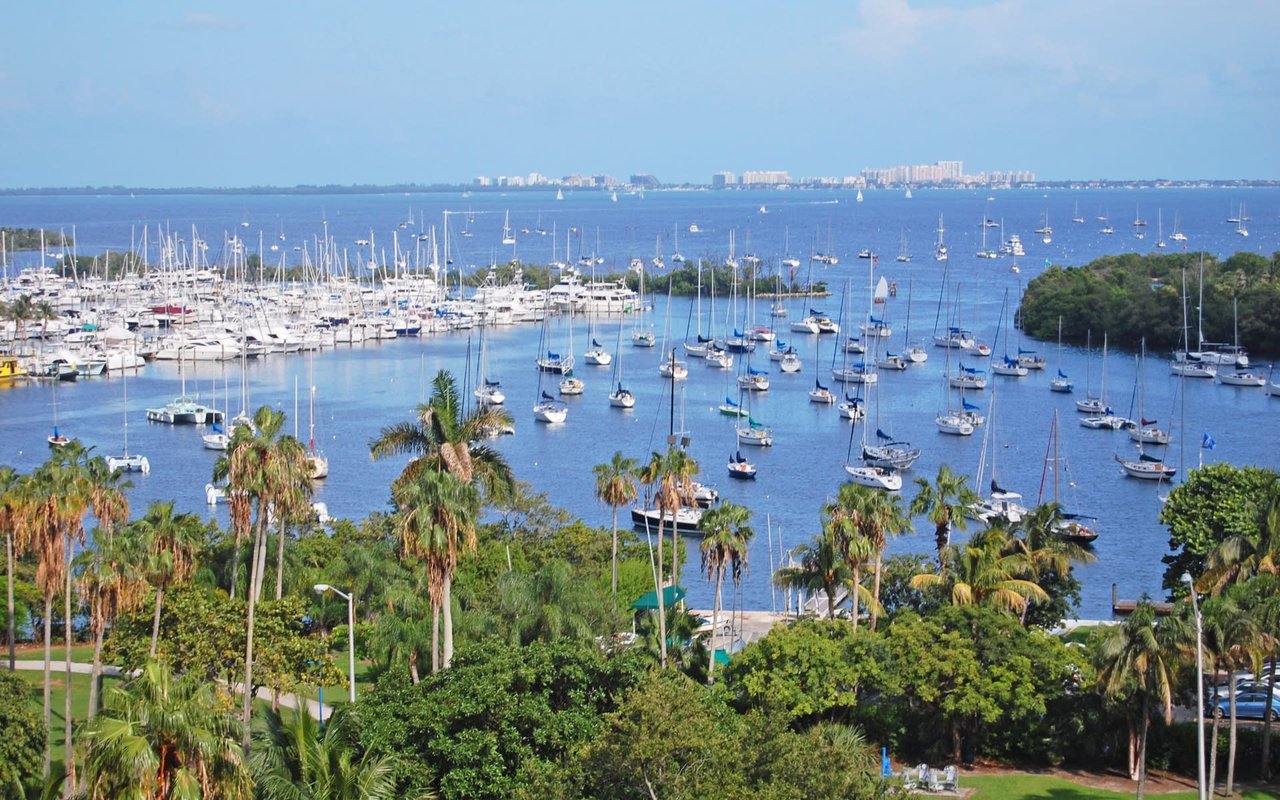
In late March 2026, a charming 4-bedroom home on Lennox Drive in South Coconut Grove sold for 3 million dollars. The home itself was built in 1939, livable and rentable, but the listing called it what it really was: an opportunity to build new on a 15,647 square foot lot. The buyer was not paying for the structure. They were paying for the land.
That sale tells you most of what you need to know about the teardown market in our neighborhood right now. With 2025 new construction homes regularly trading above 5, 6, even 7 million dollars in the Grove, the math on demolishing a tired house and building something new can quietly work. Our team gets this question from buyers and sellers more often than almost any other. Here is how we think about it.
In this guide
- When a teardown actually makes sense
- How to read land value in the Grove
- What NCD-3 lets you build, and what it doesn't
- The 2024 demolition waiver change (and why it matters)
- How to read a lot before you buy
- Real numbers: cost, timeline, and risk
When a teardown actually makes sense
Not every old house in Coconut Grove should come down. Some of our most beloved homes are 1920s and 1930s originals with real architectural value, deep bones, and the kind of charm that no new build can replicate. We covered the case for buying historic homes in our guide to historic Grove properties.
A teardown makes sense when one or more of these conditions are true:
- The lot is significantly more valuable than the structure (your purchase price is mostly land).
- The home has structural, electrical, plumbing, or roofing issues that cost more to fix than to replace.
- The floor plan is impossible to adapt to modern family life without gutting it down to studs.
- The lot can support a much larger or better-positioned home under current zoning.
- Comparable new construction in the area is selling for meaningfully more per square foot than renovated older homes.
If only one or two of those apply, a smart renovation can outperform a teardown. If three or more apply, you are usually looking at a teardown candidate.
How to read land value in the Grove
In neighborhoods like Coconut Grove, land value is driven by location, lot size, lot shape, street character, and what the zoning allows you to build on the parcel. Three quick benchmarks from recent Q1 2026 sales illustrate how it lands:
- 3972 Loquat Avenue: 14,489 square foot lot in the heart of the Grove, 1936 original 2-bedroom on the property. Closed at 2.572 million in March 2026. Buyer is paying about 178 dollars per square foot of land, with the existing structure essentially priced as a bonus.
- 4255 Lennox Drive: 15,647 square foot lot, 1939 home, livable. Closed at 3 million in March 2026, or roughly 192 dollars per square foot of land.
- 2928 Louise Street: Smaller lot, triplex, walking distance of Coco Walk and downtown Coconut Grove. Closed at 1.525 million in March 2026.
A working rule of thumb in the Grove right now is roughly 175 to 295 dollars per square foot of land for a clean teardown candidate, with premium streets and bay-adjacent positioning trading higher. Smaller, less desirable, or constrained lots can sit closer to 160 to 190 per square foot. Always verify with a local agent who has run the comps. Our team offers a complimentary home valuation for owners considering selling and for buyers underwriting a specific lot.
Looking at a specific lot in the Grove? Reach out to our team and we will pull the comparable sales, lot data, and zoning analysis for you.
What NCD-3 lets you build, and what it doesn't
Coconut Grove sits inside a special zoning overlay called NCD-3, the Coconut Grove Neighborhood Conservation District. NCD-3 sits on top of the standard Miami 21 zoning, and it is more protective than the rest of the city. The character of the Grove (mature canopy, tree-lined streets, varied lot shapes, walkable village scale) is the entire reason it exists, and it shapes everything you can or cannot build.
A few specifics every teardown buyer should know:
- Front setback is 30 feet. Standard T3 zoning in Miami requires 20. The Grove requires 30. Porches, entries, and loggias get small projection allowances, and corner lots have slightly different rules.
- Lot coverage and floor lot ratio (FLR) are capped, so you cannot just maximize square footage on the parcel. The exact caps depend on lot size and configuration.
- Tree Preservation Ordinance applies. Existing significant trees (live oaks, mahoganies, royal poincianas, banyans) typically cannot be removed without a permit and tree mitigation. Most demolition permits require a tree survey by a certified arborist and a buildable footprint diagram.
- Buffer Tree requirement. New construction often requires installation of canopy trees that meet specific size and species standards.
- Architectural variation. Adjacent lots under single ownership cannot use duplicate architectural plans. Massing and footprint must be substantially differentiated.
- Garage placement and driveways are tightly regulated. Street-facing garages must sit at least 20 feet behind the front wall of the house, and driveway widths are capped within the front setback.
The full NCD overlay information is on the City of Miami website. The takeaway: the Grove is more restrictive than Miami at large, but the rules also protect the very thing that makes the neighborhood worth the price you are paying. Build with the rules, not against them, and your finished home will be worth more.
The 2024 demolition waiver change
This is the single most important update most teardown content has not caught up with. In July 2024, the City of Miami's Office of Zoning eliminated the demolition waiver requirement for properties in NCD-3. Before the change, a demolition permit could trigger a waiver process that often added six months or more to a project timeline. After the change, the path is significantly faster.
A few caveats to keep in mind. Tree preservation review still applies. Demolition that maintains 50 percent or more of an original structure (excluding later additions) generally does not require the same waiver in the first place. And historic properties or those in Village West / NCD-2 follow different rules. But for most Coconut Grove single-family teardown candidates, the path to demolition permit is faster in 2026 than it was two years ago.
The City of Miami's demolition permit page outlines the official application requirements.
How to read a lot before you buy
Before signing any contract on a teardown candidate, our team always recommends running the following checklist:
- Pull the zoning. Confirm the parcel's transect zone (T3-R, T3-O, T3-L, T4-L, T4-O) and any overlays. Two adjacent lots can have different rules.
- Order a tree survey. Mature live oaks, banyans, and other protected trees can dictate where you build, how big, and how the driveway and pool can be positioned.
- Check flood zone, elevation, and seawall. Coconut Grove has elevation variation, so the flood zone designation can shift block to block.
- Confirm utilities. Many older Grove homes are still on septic. Connecting to municipal sewer, where available, can be a meaningful cost.
- Sketch a buildable footprint. An architect can quickly produce a study showing how big a home you can actually build on the lot once setbacks, FLR, and tree preservation are applied. This is the single best money you can spend before going under contract.
- Underwrite the full project budget. Land + demolition + permitting + design + construction + carrying costs + contingency. Compare against current new construction comps to verify the math.
Real numbers, real timelines
A realistic Coconut Grove teardown-and-rebuild project, end to end, typically looks like this. Land acquisition: 1.5 million to 4 million depending on size and street. Architecture and engineering: 5 to 10 percent of construction cost. Demolition and site prep: 30,000 to 90,000 dollars. Construction at high-end finish levels: 600 to 900 dollars per square foot. Soft costs, carrying costs, and contingency: 10 to 15 percent. Total timeline from purchase to certificate of occupancy: typically 18 to 30 months, sometimes longer. We work closely with our clients on these projects from start to finish, and we have seen the difference disciplined budgeting and a strong general contractor make.
For sense of finished product values, recent Coconut Grove 2025 new construction sales include 4024 Bonita Avenue at 6.7 million, 3101 Jefferson Street (Tulum-inspired) at 6.1 million, and 4010 Park Avenue at 5.4 million furnished. Browse current new construction inventory for current pricing.
Whether you are evaluating a specific lot, weighing renovation versus teardown on a home you already own, or thinking about a ground-up build, our Buyer's Guide walks through the broader process of working with our team in Coconut Grove.
Considering a teardown in Coconut Grove? Reach the Ally and AJ Team at ONE Sotheby's International Realty at 305.744.2989, email [email protected], or get in touch through our contact page. We will pull the comps, run the zoning, and help you decide whether the math works.