Coconut Grove vs. Key Biscayne: Which Miami Neighborhood Is Right for You?
If you are looking for a luxury family neighborhood in Miami with top schools, waterfront access, and a genuine sense of community, your search probably comes down to two places: Coconut Grove and Key Biscayne. Both are beautiful. Both attract serious buyers. And both offer a lifestyle that feels worlds apart from the rest of Miami. But they are very different places to live.
Here is an honest comparison to help you decide which one fits your family, your budget, and your priorities.
Location and Access: Village vs. Island
The most fundamental difference between Coconut Grove and Key Biscayne is geography. Coconut Grove is on the mainland, connected to Brickell, Coral Gables, South Miami, and the rest of Miami by surface streets and US-1. You can drive to Miami International Airport in 15 minutes. Downtown Miami and Brickell are less than 10 minutes away. Metrorail stations at Coconut Grove and Douglas Road provide public transit access.
Key Biscayne is a barrier island accessible only via the Rickenbacker Causeway, a tolled bridge that connects the island to the mainland near Brickell. The drive is scenic, but it adds time and cost to every trip. During rush hour or after events at Crandon Park, causeway traffic can be significant. If the causeway is ever closed due to weather or an emergency, you are on the island until it reopens.
For buyers who commute, travel frequently, or simply want the ability to walk or bike to restaurants, shopping, and daily errands without getting in a car, Coconut Grove has a clear advantage. For buyers who want to feel removed from the city and prefer the quiet seclusion of island life, Key Biscayne delivers something Coconut Grove cannot.
How Do Home Prices Compare in 2026?
Both neighborhoods are premium markets, but the pricing dynamics are different.
In Coconut Grove, March 2026 data shows single-family homes trading at a median of approximately $3.39 million, with prices ranging from about $1 million to $7.25 million. Price per square foot for single-family homes ranged from $762 to $1,597. Townhomes and condos had a median around $1.56 million.
In Key Biscayne, the median listing price in early 2026 was approximately $2.55 million across all property types, with a median price per square foot around $1,103. Single-family homes on the island are listed from roughly $2.8 million to nearly $30 million. The condo market is more active, with units ranging from under $500,000 to over $20 million in luxury oceanfront buildings.
The key difference is inventory mix. Key Biscayne's real estate market is heavily weighted toward condos (about 70% of available inventory). Coconut Grove's market is primarily single-family homes and townhomes. If you are specifically looking for a single-family home with a yard, Coconut Grove offers significantly more options at a wider range of price points.
Walkability and Daily Life
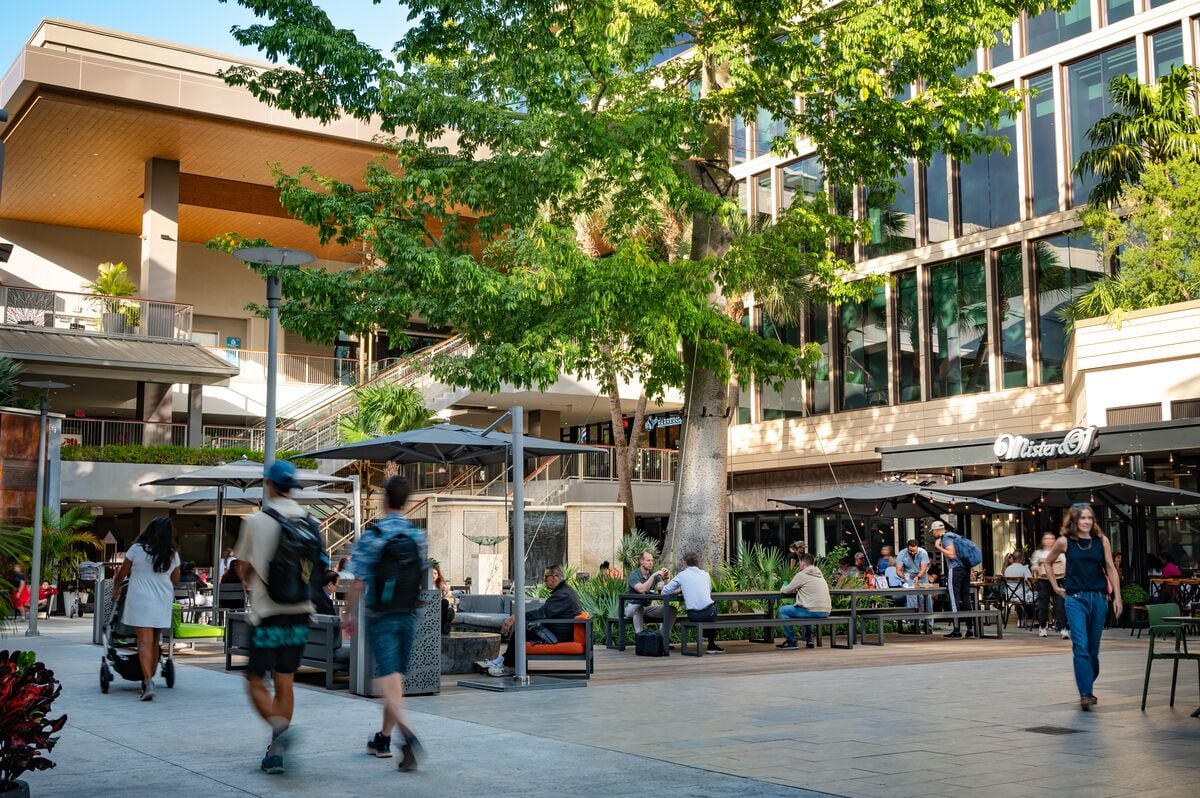
This is where Coconut Grove truly stands apart. The Grove's walkable village center around CocoWalk offers dozens of restaurants, cafes, boutiques, a movie theater, grocery stores, a weekly farmers market, and everyday services all within a few blocks. You can walk from most residential streets to the village in 10 to 15 minutes. National publications have called Coconut Grove one of the most walkable luxury neighborhoods in Miami, and that walkability changes how people actually use the neighborhood day to day.
Key Biscayne has its own commercial area along Crandon Boulevard with grocery stores, restaurants, and shops. It is pleasant and convenient for island residents, but it is smaller in scale and less diverse than Coconut Grove's dining and retail scene. Most Key Biscayne residents drive to their daily errands, even on the island, because the commercial district is concentrated in one area rather than woven throughout the neighborhood.
Want to experience the walkability firsthand? We love giving walking tours of the neighborhood. Contact us to schedule a visit to Coconut Grove.
Schools: Both Are Excellent
Both neighborhoods offer outstanding school options, which is a major reason families choose either one.
Coconut Grove is home to some of Miami's most prestigious private schools, including Ransom Everglades (grades 6 through 12), Carrollton School of the Sacred Heart (Pre-K through 12), St. Stephen's Episcopal Day School, and Immaculata-La Salle High School. Public options include Coconut Grove Elementary and the magnet programs at George Washington Carver.
Key Biscayne's public school system is a standout. The Key Biscayne K-8 Center is consistently rated among the top public schools in Miami-Dade County, and MAST Academy (a public magnet high school on Virginia Key) is highly regarded. Several private schools on the island and nearby on the mainland round out the options.
Families who prioritize top-tier private education often lean toward Coconut Grove because the schools are literally in the neighborhood. Families who want excellent public schools without private school tuition find Key Biscayne very attractive.
Outdoor Life and Water Access
Both neighborhoods offer exceptional outdoor living, but the character is different.
Key Biscayne has genuine beaches. Crandon Park Beach and Bill Baggs Cape Florida State Park are among the best beaches in South Florida, with calm, clear water and natural beauty. If beach access is a priority for your family, Key Biscayne wins easily. The island also offers Crandon Park Golf Course and excellent tennis facilities.
Coconut Grove offers a different kind of outdoor life. The neighborhood's parks (Peacock Park, Regatta Park, Kennedy Park, David T. Kennedy Park) line the bayfront with green space, playgrounds, and walking paths. Coconut Grove is the boating capital of Miami, with multiple marinas and yacht clubs, including the Coral Reef Yacht Club and Biscayne Bay Yacht Club. The tree canopy throughout the neighborhood makes walking, jogging, and biking comfortable even in the summer heat. But Coconut Grove does not have a beach.
Insurance and Flood Risk: A Critical Difference
This is a factor that cannot be ignored in 2026. Key Biscayne is a barrier island, and virtually the entire island sits in a flood zone. According to recent data, 99% of properties in Key Biscayne face significant flood risk over the next 30 years. Flood insurance is not optional on the island, and premiums can be substantial, especially for ground-floor condos and waterfront homes.
Coconut Grove has more varied elevation. While some areas near the waterfront are in flood zones, many streets in the interior of the neighborhood sit on higher ground along the Miami Rock Ridge, a natural limestone ridge that averages about nine feet above sea level. Buyers in Coconut Grove can find properties outside of flood zones, which can mean significantly lower insurance costs. We help buyers identify these pockets on a street-by-street basis.
Community Feel
Key Biscayne feels like a small town that happens to be 15 minutes from downtown Miami. It has its own village government, its own police department, and a tight-knit community where people know their neighbors. The island's isolation creates a strong sense of belonging, and many families stay for decades.
Coconut Grove has a similar community spirit, but with more texture. The neighborhood has artists, entrepreneurs, long-time local families, and newcomers from around the world. It has a cultural identity that includes the Goombay Festival, the King Mango Strut, the Coconut Grove Arts Festival, and a history that stretches back to the 1880s. It feels more diverse and more dynamic, while still offering the intimate village atmosphere that families love.
Comparing neighborhoods? We help buyers evaluate Coconut Grove against Key Biscayne, Coral Gables, Pinecrest, and other top Miami neighborhoods every week. Search Coconut Grove listings or call us at 305.744.2989.
Quick Comparison at a Glance
Mainland access: Coconut Grove: direct, no bridge. Key Biscayne: tolled causeway only.
SFH median price (2026): Coconut Grove ~$3.39M. Key Biscayne SFH start ~$2.8M (limited inventory).
Condo/TH median: Coconut Grove ~$1.56M. Key Biscayne ~$1.6M (much larger condo inventory).
Walkability: Coconut Grove: high (village center, CocoWalk). Key Biscayne: moderate (car-dependent for most errands).
Beach access: Coconut Grove: no beach. Key Biscayne: excellent beaches.
Flood risk: Coconut Grove: varies by street (some areas on higher ground). Key Biscayne: 99% flood risk.
Schools: Coconut Grove: top private schools in neighborhood. Key Biscayne: excellent public K-8.
Dining/retail: Coconut Grove: extensive, walkable. Key Biscayne: smaller, concentrated along Crandon Blvd.
Best for: Coconut Grove: walkability, culture, mainland convenience, variety. Key Biscayne: beach life, seclusion, public schools, island quiet.
Which Should You Choose?
If you want beach access, a small-town island feel, and are comfortable with causeway-dependent living, Key Biscayne is a wonderful choice. If you want walkability, cultural depth, a wider range of home types, mainland convenience, and potentially lower insurance costs, Coconut Grove is hard to beat.
Many of our clients visit both neighborhoods before deciding, and we encourage that. The right answer is always the one that matches how you actually want to live, not just where you want to invest.
If you are thinking about buying or selling in Coconut Grove, we would love to connect. Reach out to the Ally and AJ Team at ONE Sotheby's International Realty at 305.744.2989 or visit us at allyandaj.com.