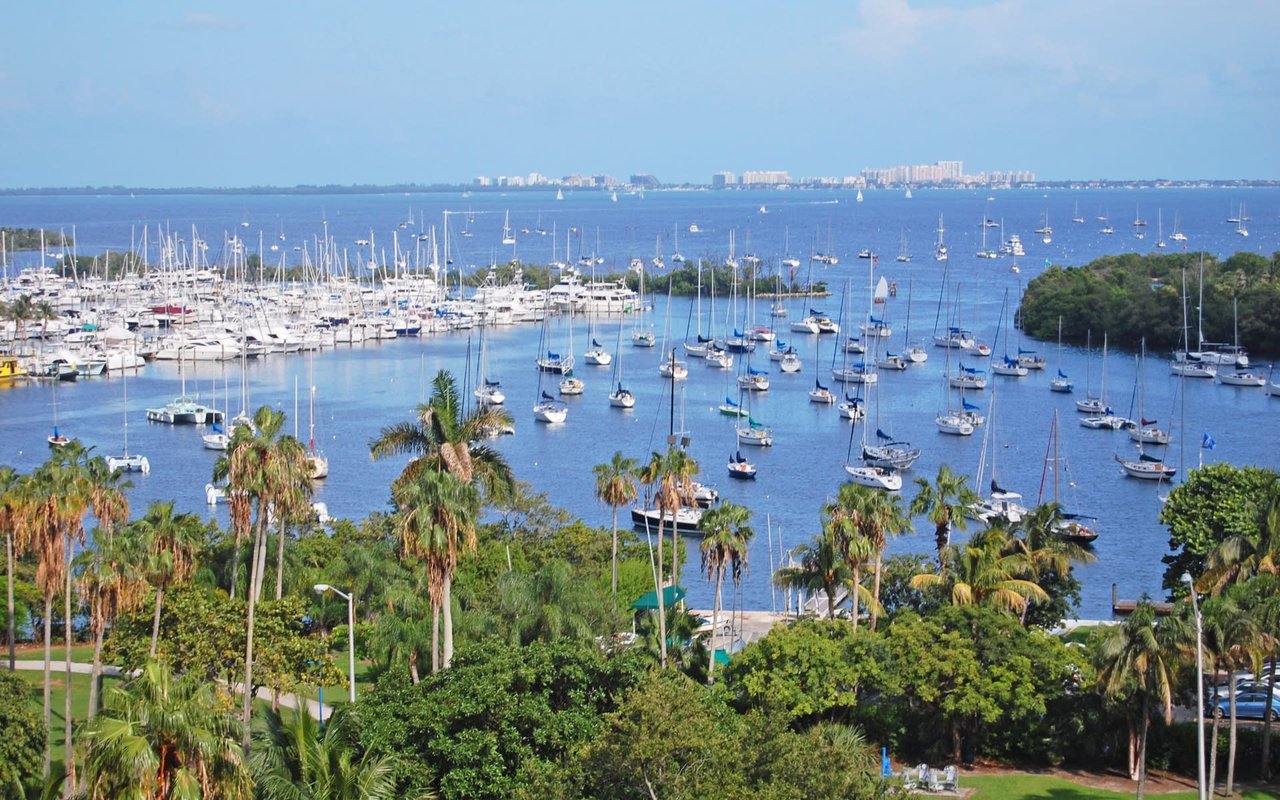
Hurricane season starts June 1, and if you live in Coconut Grove or are about to call it home, the questions start coming early. How real is the risk? What is the 2026 forecast saying? Will insurance be a nightmare? Our team walks you through what is actually happening this year, what makes our neighborhood more resilient than most people realize, and the practical moves that protect your home, your family, and your investment.
In this guide
- 2026 Atlantic hurricane season outlook
- Why Coconut Grove handles storms better than most people think
- Insurance in 2026: rate cuts, wind mitigation, and what changed
- Real estate decisions to make before June 1
- The pre-season checklist every homeowner should run
- First hurricane season as a new resident? Read this
What to expect: the 2026 Atlantic hurricane season outlook
The 2026 Atlantic hurricane season runs from June 1 through November 30. Colorado State University, which has issued the most respected seasonal outlook since 1984, released its April 9 forecast calling for a slightly below average season: 13 named storms, 6 hurricanes, and 2 major hurricanes. The long term average sits at 14 named storms, 7 hurricanes, and 3 major hurricanes.
The forecast is below average for one main reason. Forecasters are watching a developing El Niño in the Pacific, which historically increases wind shear over the Atlantic. High wind shear tilts storms apart before they organize into something dangerous. Tropical Storm Risk and the Weather Channel both released similar outlooks calling for a quieter year. The National Hurricane Center begins issuing daily Tropical Weather Outlooks on May 15, two weeks before the official start of the season.
Two important caveats. First, a quieter season does not mean a safe season. The 2025 season was technically near average and still produced three Category 5 storms (Erin, Humberto, and Melissa). Second, El Niño development timing matters. If it arrives later than expected, the early part of the season could still be active. We approach every season the same way regardless of the forecast: prepared, calm, and informed.
Looking at homes in Coconut Grove this spring? Browse current listings or reach out for a private tour with our team.
Why Coconut Grove handles storms better than most people think
Coconut Grove is one of Miami's oldest neighborhoods, founded in the 1870s. There is a reason people have kept building here for 150 years. Several local factors quietly work in our favor when storms approach.
Elevation. Most of Coconut Grove sits at higher elevation than the rest of the Miami coastline. Areas along South Bayshore Drive, the Moorings, parts of North Bay Homes Drive, and inland streets like Hibiscus and Plaza often sit on natural ridges. While storm surge is the deadliest part of any hurricane, much of our neighborhood sits well above the most surge vulnerable zones.
Tree canopy. The famous Coconut Grove tree canopy, mostly mature live oaks, mahoganies, and royal poincianas, is more than aesthetic. Mature trees that are properly maintained slow wind and absorb gusts the way newer subdivisions cannot. The risk, of course, is that the same canopy can drop limbs during storms, which is why pre-season trimming is the single most important thing we tell every Grove homeowner.
Building stock. A surprising amount of Coconut Grove inventory has been hardened over the past two decades. After Hurricane Andrew in 1992, Florida adopted some of the strictest wind codes in the United States. Most new construction homes built since the early 2000s, and most major renovations, include impact rated windows, reinforced roof systems, and code compliant tie downs. Recent closings on our streets confirm it. New new construction homes on Bonita, Jefferson, and Park Avenue closed above $5 million precisely because buyers know they are buying a home built for the climate.
Community. Hurricanes are also a community event. Neighbors check on neighbors. Hardware stores extend hours. Grocery stores prep before everyone else. Living through one season here teaches you that the Grove is small enough to feel like a village when it counts.
The honest counterpoint. Older homes built before the 1990s, especially homes with original roofs, original windows, or original electrical, do carry real risk. So do flood prone pockets near the water. Knowing what you own, or what you are about to buy, matters more than the forecast.
Insurance in 2026: rate cuts, wind mitigation, and what changed
This is the section nobody else covers honestly, and it matters most.
Rates are coming down for the first time in years. In Spring 2026, the State of Florida approved Citizens Property Insurance rate reductions that average 8.7 percent statewide. Miami-Dade County saw an average reduction of 14.0 percent, with about 42,000 local homes affected. After three years of brutal increases, this is real relief.
The relief is broader than Citizens. Since the 2022 and 2023 tort reforms passed, 17 new insurance carriers have entered the Florida market. Citizens, which once held more than 1.4 million policies, has dropped to roughly 385,000 to 395,000 policies as private carriers re-engage. The market is healthier than it has been in years, although premium levels remain elevated compared to most of the country. South Florida homeowners typically see annual premiums in the $4,375 to $7,290 range, depending on home value, age, and risk profile.
Hurricane deductibles. Almost every Florida policy has two deductibles. The standard deductible (often $1,000 to $5,000) applies to fire, theft, and non-storm losses. The hurricane deductible kicks in only when a hurricane is officially named, and is calculated as a percentage of your dwelling value: 2 percent, 5 percent, or 10 percent. On a $2 million Coconut Grove home, a 2 percent hurricane deductible is $40,000 out of pocket before insurance pays a dollar. Always know your deductible before you need to file a claim.
The wind mitigation inspection that actually saves money. This is the single most underused insurance tool in Florida. A wind mitigation inspection (the OIR-B1-1802 form, which was updated in April 2026) costs roughly $75 to $150 and is valid for five years. It documents impact windows, roof attachments, hurricane straps, opening protection, and roof shape. Each item can unlock a discount, and total savings frequently run into thousands per year. If you have not had one done since the form was updated, get one now. The April 2026 update means buyers and sellers alike may find new credits that were not available last year.
Flood is separate. Hurricane wind is covered by your homeowners policy. Flooding from storm surge or heavy rain is not. Flood insurance comes through the National Flood Insurance Program or a private flood carrier. If you live in a flood zone, the choice is not optional. If you live in Zone X (lower risk), flood insurance is still strongly recommended for any property near water or low elevation.
Buying or selling in Coconut Grove this season? Our team helps every client review insurance, deductibles, and wind mitigation reports before going under contract. Reach out at 305.744.2989 or send us a note through our contact page.
Real estate decisions to make before June 1
Hurricane season changes how we work with both buyers and sellers. A few specific calls every Coconut Grove client should think about right now.
For buyers
If you want to close before peak season (mid August through October), move quickly. Lenders, inspectors, and title companies all back up in late summer. The bigger question is insurability. A home that is hard to insure is a home you will struggle to finance. Our recommendations:
- Get insurance quotes before you make an offer, not after.
- Ask the seller for a current 4-point inspection (covers roof, plumbing, electrical, HVAC). Most carriers require it for homes over 25 years old.
- Ask for a wind mitigation report. If it is older than five years, factor a new one into your due diligence.
- Pay attention to roof age. Most carriers will not write a new policy on a roof older than 20 years, sometimes older than 15.
- If the home has septic, confirm it is permitted and current. Many older Grove homes are still on septic, which works fine, but matters for storm preparedness.
For relocation buyers, our full Buyer's Guide walks through every step from search to close.
For sellers
A pre-season prep package can shorten your time on market and protect your price. Before listing, consider:
- Order a wind mitigation inspection and a 4-point inspection. Hand them to your agent.
- Service or replace shutters and impact systems. Document them.
- Trim trees and document the work (photos plus arborist invoice).
- If your roof is older than 15 years, talk to us before listing. In some cases, a new roof recovers more than its cost in a faster sale and a higher price.
- Highlight every storm hardening feature in your listing description and showings.
Q1 2026 data tells the story. In the homes we tracked across Coconut Grove, well prepared properties consistently moved fastest. Several closed in under 10 days. The slow movers all shared a profile: dated systems, old roofs, weak insurance histories. For a current view of value, request a free home valuation from our team. Our full Seller's Guide walks through everything else.
The pre-season checklist every Coconut Grove homeowner should run
Print this. Stick it on your fridge. Run through it every May.
The home itself
- Trim trees and palms back from the house, and clear loose limbs.
- Clean gutters and downspouts.
- Test impact windows and shutters. Replace any missing hardware.
- Inspect the roof for loose tiles, lifted shingles, or vent damage.
- Service or fuel the generator.
- Confirm sump pump and any pool drainage are working.
- Photograph every room and exterior wall for insurance documentation.
Your paperwork
- Confirm hurricane wind, flood, and umbrella policies are active and renewed.
- Save digital copies of your policy, deed, passport, and insurance contact in cloud storage.
- Verify your wind mitigation report is under five years old.
- Update your home inventory.
Your supplies
- Pre-stage water (one gallon per person per day, seven days minimum).
- Non-perishable food, batteries, flashlights, first aid kit.
- Cash in small bills.
- Backup phone charger and battery banks.
- Pet supplies, prescriptions, and any medical equipment with backup batteries.
Your plan
- Know your evacuation zone (search at Miami-Dade Emergency Management).
- Know two evacuation routes out of the Grove.
- Have a destination and a contact list. Share with family.
- Identify a friend or family contact outside Florida as a check-in point.
The goal is not paranoia. The goal is that when a real storm appears, you are calm because you already did the work.
First hurricane season as a new resident? Read this.
Most of our relocation clients from California, New York, Chicago, and abroad ask the same thing in their first April or May: how worried should we actually be? Honest answer: prepared, not worried.
Most seasons in Coconut Grove pass quietly. Some years we do not even put up shutters. When a real storm threatens, the rhythm of the neighborhood is calm and structured. Schools and businesses follow Miami-Dade County guidance. Most Grove residents who do not live in surge zones tend to shelter in place, especially if their home is post-Andrew construction or has been hardened. Evacuation orders typically apply to surge zones and mobile home areas. Most of our neighborhood is neither.
After a storm, give yourself a few days. Power may be out, traffic lights may be down, and fallen branches will be everywhere. Within 48 to 72 hours of most storms, the city has cleared major roads and crews are restoring power neighborhood by neighborhood. Within a week of even a serious storm, the Grove is functional again.
Our team has lived and worked through every season in this neighborhood. We answer questions for clients all year, but especially in May and June. If you are new and want a one on one walk through specific to your home or the home you are considering, we are happy to set it up.
Whether you are buying, selling, or just settling into your first Coconut Grove summer, our team is your year round resource. Reach the Ally and AJ Team at ONE Sotheby's International Realty at 305.744.2989, email [email protected], or visit allyandaj.com to start the conversation.