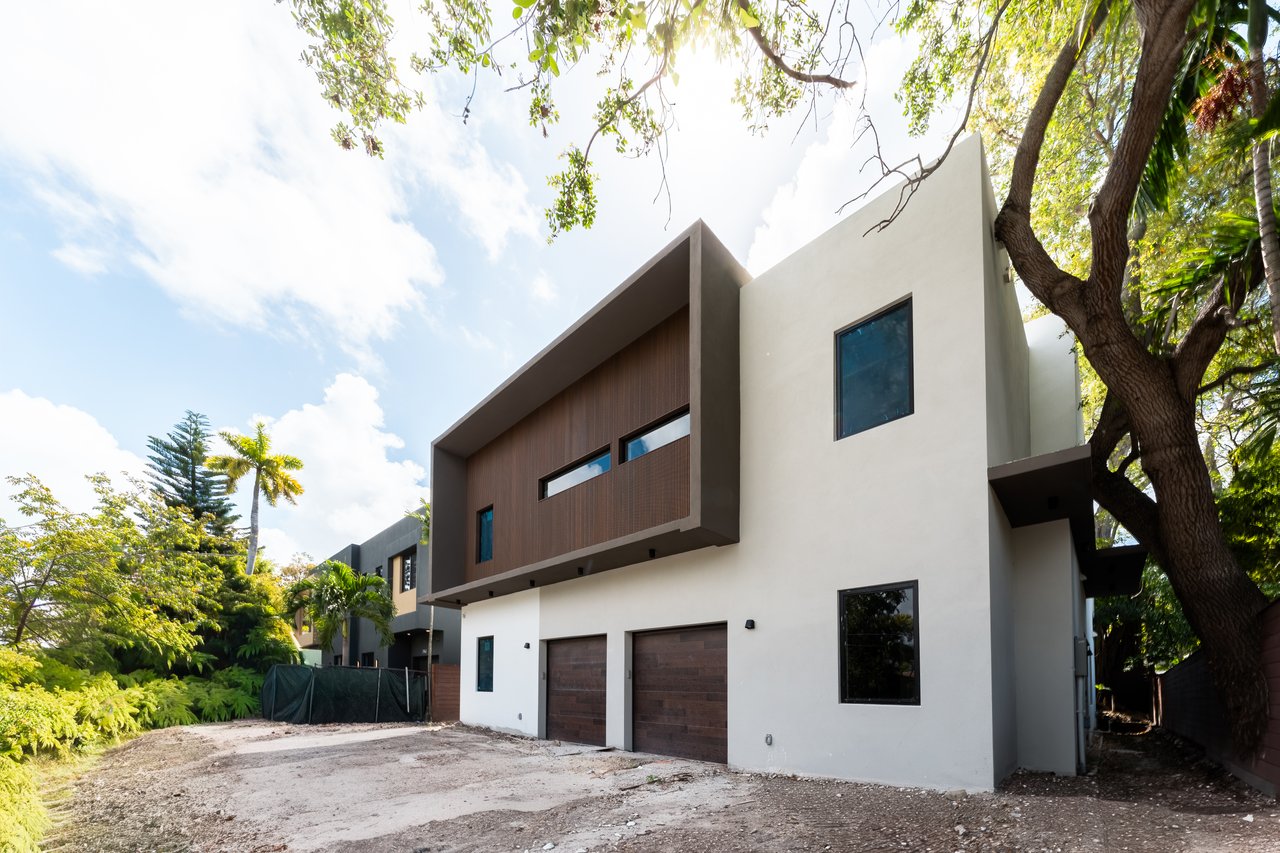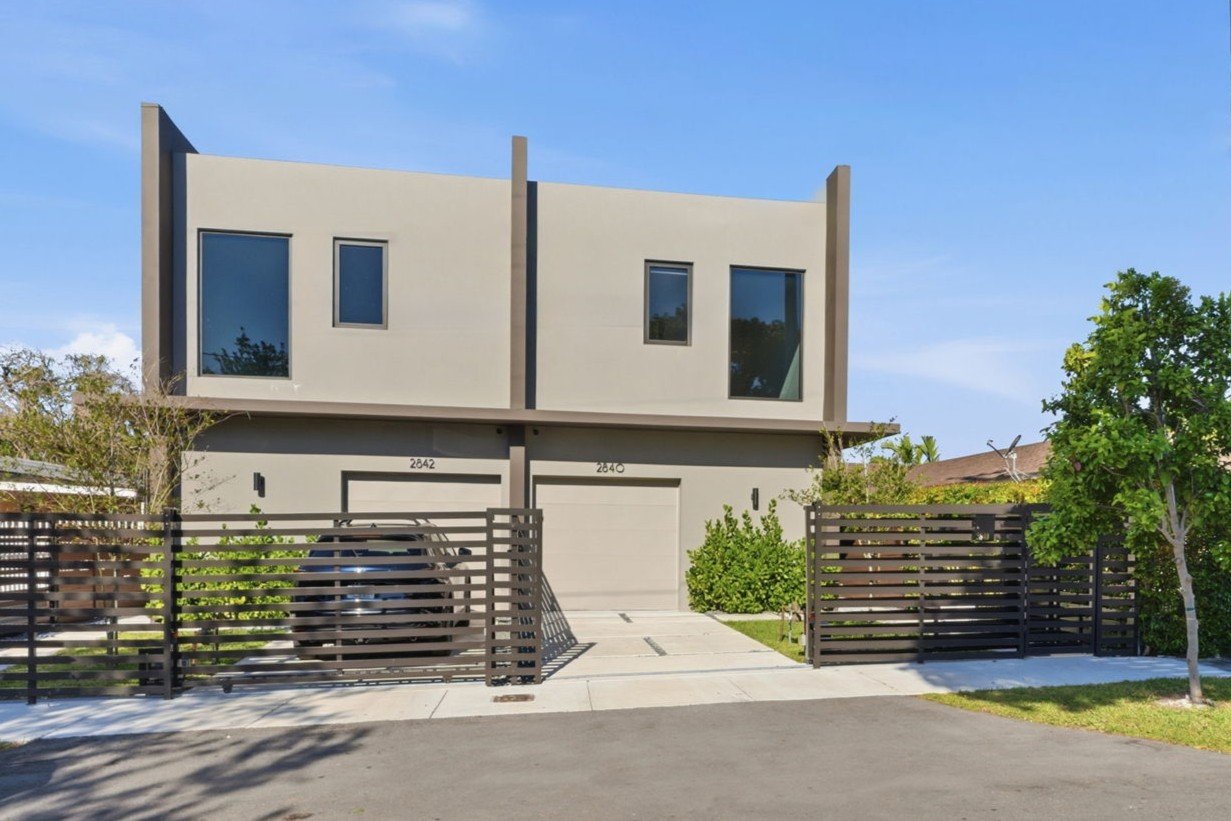
In March 2026, a quiet little triplex on Louise Street sold for 1.525 million dollars. The list price was 1.5 million. Days on market: One. No big marketing push, no glossy photo shoot, just a well-located income property in Coconut Grove that an investor saw, ran the numbers on, and bought above asking before anyone else had a chance.
That sale tells you most of what you need to know about where small multi-family is right now in our neighborhood. There is real demand, very limited supply, and the kind of buyer profile that knows exactly what these properties are worth. If you are an investor, a house-hacker, or a Coconut Grove homeowner sitting on a property that could be repositioned for income, we wrote this guide for you.
In this guide
- Why Coconut Grove rentals work the way they do
- A quick read on Miami's 2026 multi-family market
- What zoning actually allows in our neighborhood
- The four ways to play Coconut Grove multi-family
- How to underwrite the numbers (cap rates, deductions, taxes)
- Risks honest investors should pencil in
- How our team works with investors
Why Coconut Grove rentals work the way they do
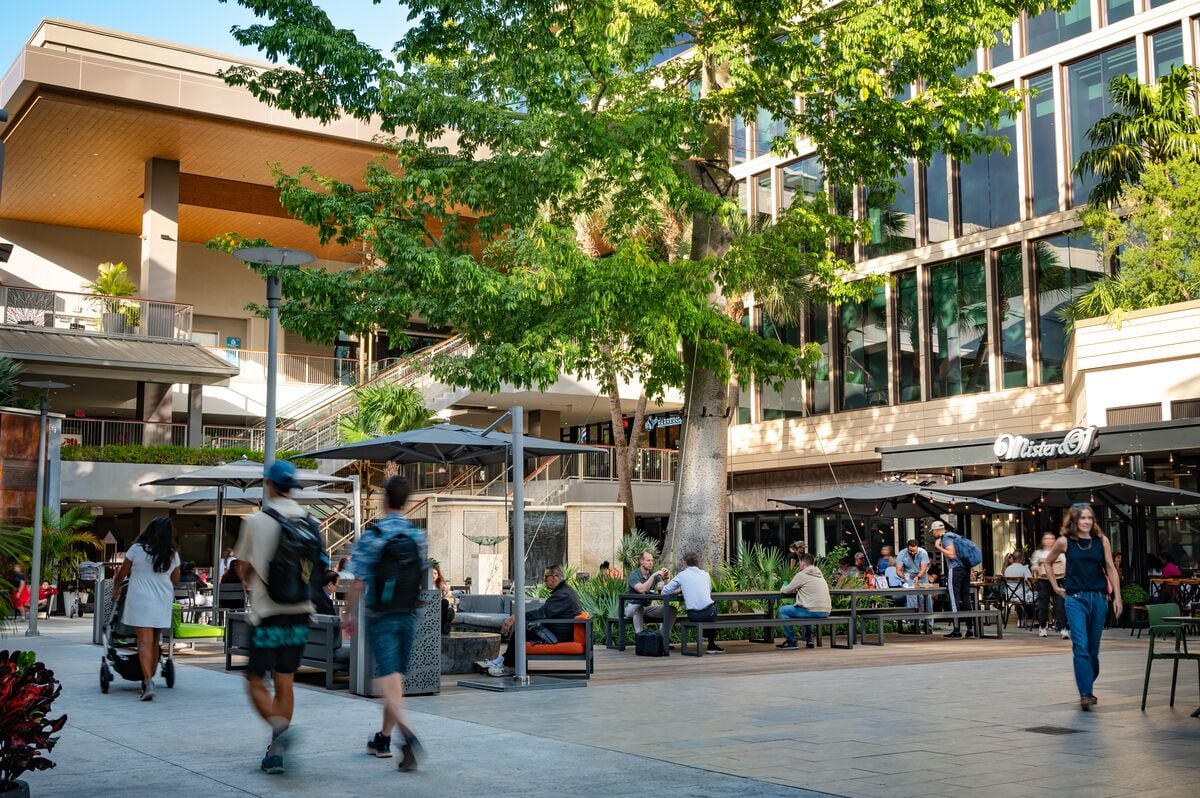
Coconut Grove is one of the only neighborhoods in greater Miami where you can live without a car if you want to. The downtown village, with its restaurants, coffee shops, marinas, and parks, is walkable from most pockets of the Grove. That single fact drives a rental dynamic most Miami neighborhoods do not have. Tenants will pay a premium, and they renew.
The tenant pool is also unusually deep. Young professionals from financial services and tech firms relocating from New York and California want walkability. Latin American families want a safe, school-aware setting. Visiting professors at the University of Miami and Ransom Everglades faculty want short, easy commutes. Empty-nesters who sold a larger home in the suburbs of Pinecrest or Coral Gables often rent in the Grove for a year or two while they decide what comes next. That mix means relatively low turnover, a long renter pipeline, and the ability to be choosy.
Add Miami-Dade's broader story (Florida has no state income tax, the population grew by more than 100,000 residents over the past five years, and limited developable land keeps new supply tight), and you get the structural backdrop that makes Coconut Grove rentals fundamentally durable.
A quick read on the 2026 multi-family market
Some context on the broader market. Miami was one of the top three multi-family return markets in the United States through Q3 2025, posting annualized returns above 8.4 percent. National analysts expect cap rates to begin compressing slightly in 2026 as credit conditions ease and distress resolves. Apartment loan rates have settled into the high 5 percent and low 6 percent range for stabilized assets, although small multi-family typically borrows on slightly different terms.
Within Miami-Dade, cap rates by zone span a wide range. Key Biscayne, the priciest end of the market, trades around 3.8 percent. Florida City sits around 7.5 percent. Coconut Grove and the surrounding established neighborhoods cluster in roughly the 4.5 to 5.5 percent range for small multi-family on a market-rent basis, sometimes lower for trophy-quality assets. That is consistent with what we are seeing on actual closings.
Looking for current Coconut Grove income properties on or off market? Browse live listings or contact our team for properties not yet on the public MLS.
What does Coconut Grove zoning actually allow?
This is where most investors get tripped up. Miami uses a form-based code called Miami 21, which assigns each parcel a transect zone. The zoning controls how many units you can build, how tall, and how close to the lot edges. For Coconut Grove specifically, the relevant zones are:
- T3-R (Restricted): Single-family residential. One home per lot.
- T3-O (Open): Single-family or two-family (duplex). Two units allowed per lot.
- T3-L (Limited): Single-family with an accessory dwelling unit (ADU) allowed by right.
- T4-L and T4-O: Small multi-family. The pockets of Southwest Coconut Grove that were rezoned in recent years moved into these categories, and unit counts can roughly double or triple compared to T3 zoning.
- T5 along corridors: Mixed-use, taller buildings. This is where larger projects like new development on Bird Avenue and Grand Avenue live.
There is also a layer specific to Coconut Grove called the NCD-3 overlay. It tightens setbacks (the front setback in the Grove is 30 feet instead of the standard 20), regulates garage placement, and protects tree canopy. Translation: Coconut Grove is more protective than the rest of Miami, which is part of why the neighborhood feels like it does.
Miami also expanded ADU rules in 2024 to allow ADUs on additional T3 properties, with limits: ADUs are capped at 800 square feet, must be subordinate to the primary home, can only be rented if the primary residence is owner-occupied (homestead-confirmed), and require parking and setback compliance. ADUs are not a way to turn every Grove single-family home into a duplex, but they are a real income tool when the lot supports one.
Always pull the zoning yourself before you buy. The City of Miami offers a public zoning lookup tool, and the full Miami 21 code is searchable online. Two parcels next door to each other can have very different rules.
The four ways to play Coconut Grove multi-family
1. The classic small multi-family (2 to 4 units)
A duplex or triplex on a residential street, all units rented out, financed with a residential or small commercial loan. The Louise Street triplex we opened with is exactly this: a 1965 building with three units, fully rented, sold to an investor for cash flow plus appreciation. Inventory is thin (in any given quarter you may see one to three of these come up in the Grove), so when one trades, it usually goes fast.
Best for: investors who want stable cash flow plus long-term Grove appreciation, and who can hold for at least 7 to 10 years.
2. House-hacking
Buying a duplex or triplex, living in one unit, and renting the others. The big advantage is financing: you may qualify for a residential mortgage with much better terms than an investor loan. The owner-occupant unit can be your primary residence for homestead exemption purposes, which lowers your property tax bill (subject to the rules around how the rest of the property is used).
Best for: first-time buyers, professionals starting in Miami, and parents looking to buy near University of Miami who want their college-aged child to live in one unit while two others cover the carrying cost.
3. Single-family with ADU income
Buy a single-family home in a T3-L or T3-O zone where the lot supports a code-compliant ADU, then build or convert. Done well, this can add hundreds of thousands in long-term value plus a mid-five-figure annual rental stream, while keeping your primary home structure and feel intact. ADUs work especially well for guest houses, in-law suites, or studio rentals to professionals.
Best for: residents who already own (or are buying) a single-family Grove home and want a soft entrance into income property without becoming a landlord at scale.
4. Land or rezoning play
Acquire a parcel where zoning has changed or is likely to change (the Southwest Coconut Grove rezoning is a textbook example) and either redevelop or hold for value capture. This is a more speculative path, requires a strong relationship with the city, and is not for first-time investors. We mention it because some of the most striking returns in the Grove over the past five years came from owners who bought right before rezoning rather than after. Existing new construction homes in the Grove illustrate what is possible at scale.
Best for: experienced investors, family offices, and small developers with capital and patience.
How to underwrite the numbers
Quick framework. Cap rate is your annual net operating income divided by the property's price. Net operating income is gross rental income minus operating expenses (insurance, taxes, management, maintenance, vacancy reserve), but before financing.
For a small Coconut Grove triplex, a realistic underwriting today might look like: gross rents of 90,000 to 120,000 per year (depending on unit size and condition), operating expenses around 35 to 45 percent of gross, NOI in the high five-figure range, and a price somewhere between 1.4 and 2 million dollars depending on condition and lot. That implies a cap rate in the 4 to 5 percent range, with upside if you can renovate units and lift rents.
Three buckets of expense most investors underestimate in Miami: insurance (especially for older, non-impact-rated buildings), assessment risk (any building over three stories needs to comply with Florida's Surfside-driven structural safety laws, which can mean significant special assessments), and maintenance on older systems. We always pencil in real reserves rather than optimistic ones. The Florida Office of Insurance Regulation has approved meaningful 2026 rate reductions, but absolute premium levels in South Florida remain higher than national averages.
Tax-wise, multi-family is one of the friendliest asset classes in the U.S. tax code. You can depreciate the building over 27.5 years, deduct mortgage interest, deduct most operating expenses, and use a 1031 exchange to defer capital gains when you trade up. None of this is tax advice (see your CPA), but the math compounds over time. For a current valuation on a property you are considering selling and rolling, our team offers a complimentary home valuation.
Risks honest investors should pencil in
No part of this analysis matters if the risks are not honestly priced. Three to think about specifically in Coconut Grove.
Insurance and roof age. Many multi-family properties in the Grove are 1950s through 1980s construction. Older roofs and original electrical can make policies hard to write or expensive. We always pull insurance quotes during due diligence.
Tenant transitions. If you buy a fully-rented building, you inherit those leases and those rents. Below-market rents that have been in place for years can be hard to bring up without significant unit turnover, and Florida tenant law is generally landlord-friendly but has rules. Plan for vacancy and turnover costs in the first 12 to 24 months.
Hurricane risk. Same as any Miami property. Verify wind-mitigation features, hurricane deductibles, flood zone designation, and structural condition before buying. We covered this in detail in our hurricane preparation guide.
How our team works with investors
Most small multi-family deals in Coconut Grove never hit the public market. The Louise Street triplex moved in five days because the right investor was already paying attention. We spend a meaningful share of our time on relationship-driven sourcing, talking to long-term Grove owners about timing, helping investors evaluate parcels for ADU and rezoning potential, and connecting clients with vetted property managers, contractors, and lenders. If you are serious about investing here, the most useful thing you can do is start the conversation early. For a sense of how we work and the global Sotheby's network we operate within, our about page walks through the team and brand.
Whether you are buying your first duplex, scaling a portfolio, or repositioning an existing property in the Grove for income, our team is happy to dig into the specifics with you.
Thinking about buying or selling income property in Coconut Grove? Reach the Ally and AJ Team at ONE Sotheby's International Realty at 305.744.2989, email [email protected], or get in touch through our contact page.