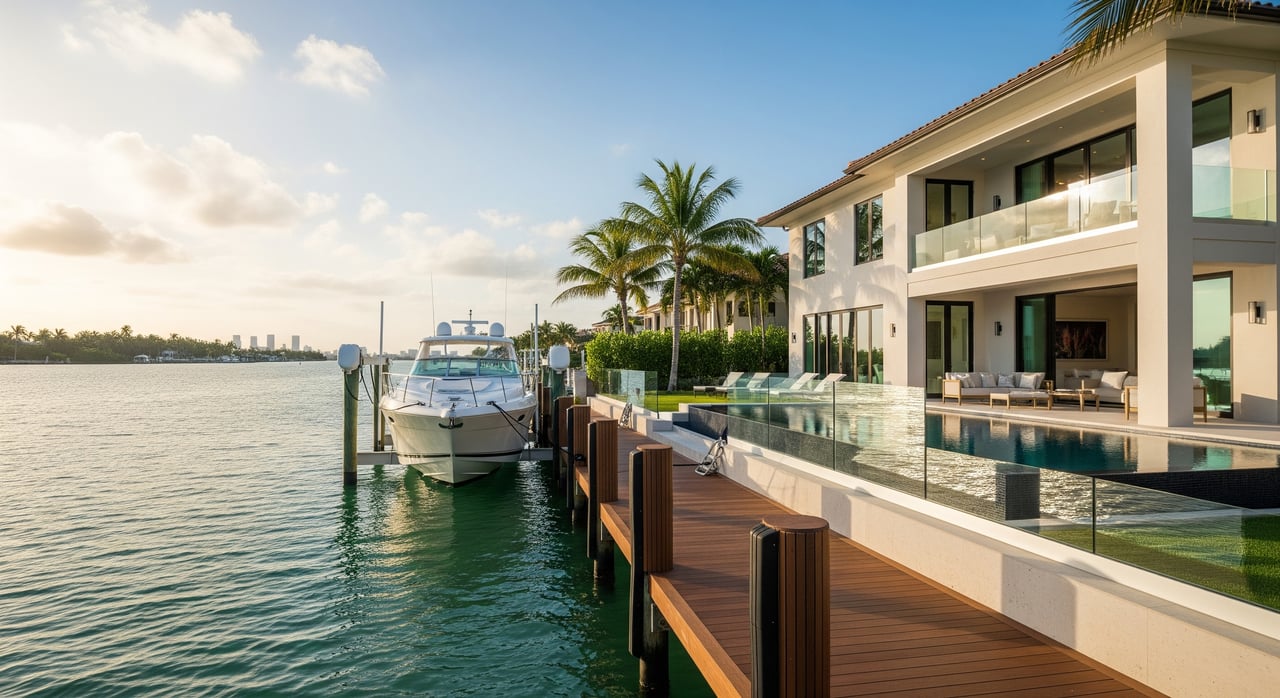
Dreaming of stepping onto your boat from your backyard and cruising Biscayne Bay in minutes? In Coconut Grove, that vision is real, but the details behind docks, seawalls, permits, and flood zones decide your day‑to‑day experience and long‑term value. In this guide, you’ll learn how bayfront and canal‑front living differ, what to verify about marine structures and insurance, and how boating rules and environmental protections affect your plans. Let’s dive in.
Waterfront options in Coconut Grove
Not all waterfront in the Grove lives the same. The type of shoreline you choose shapes your lifestyle, maintenance, and boating access.
Bayfront properties
Bayfront homes front Biscayne Bay with wide water views and the most direct connection to open water. You enjoy big skies and an iconic setting. You also face constant salt exposure, higher storm‑surge risk, and ongoing maintenance on marine hardware and exterior finishes.
- Pros: panoramic views, immediate bay access, prestige appeal.
- Considerations: stronger salt‑air corrosion, higher insurance and upkeep, and exposure to wind and waves.
Canal‑front and interior canals
Canal‑front properties often provide more sheltered mooring than open bay. Many Grove canals offer deeper water near the lot and calmer conditions for docking.
- Pros: protected berths, often better for daily docking and smaller crews, potential for deeper water near the property.
- Considerations: check controlling depth to the bay at mean low water, wake restrictions, and bridge clearances.
Near marinas and yacht clubs
Living close to facilities like Dinner Key Marina or the Coconut Grove Sailing Club can add convenience. You may tap into slip availability, services, and community events, even if your property lacks a private dock. Expect more activity and occasional noise near busy boating corridors, especially around weekends and regattas.
Nearshore streets without direct frontage
Some homes one street off the water still offer views or easy access to marinas. You get a coastal feel with less exposure to salt and storms. Pricing and maintenance often compare favorably to direct bayfront.
Docks, seawalls, and permits
Marine structures are not one‑size‑fits‑all. You need to confirm ownership, permits, and condition before you write an offer.
Who regulates what
- Florida Department of Environmental Protection: authorizes use of sovereign submerged lands and many dock or seawall projects that extend over or affect those lands.
- U.S. Army Corps of Engineers: permits activities in navigable waters and certain work that fills or alters wetlands or shorelines.
- City of Miami and Miami‑Dade County: building and environmental permits, inspections, setbacks, and local reviews.
- Historic or neighborhood overlays: certain Grove areas may add design or review steps.
What to verify on a property
- Dock status: confirm whether the dock is permitted and, if applicable, supported by a valid state lease or authorization. Unpermitted structures can limit repair or replacement and affect resale.
- Seawall records: request permits, construction date, and inspection history. A failing seawall is a major cost risk.
- Slips and rights: in condos or associations, slips may be deeded or assigned through waitlists. Read the governing documents and confirm actual control and usage rights.
- Easements and access: review surveys for the mean high‑water line, upland boundaries, and any access easements. Ask about channel dredging history if your boat’s draft is a factor.
Documents to request early
- Current survey showing the shoreline and mean high‑water line.
- Copies of all permits for docks, boat lifts, and seawalls, plus any state submerged‑lands lease.
- Association rules and slip agreements, if applicable.
- Recent seawall and dock inspection reports, elevation certificates, and maintenance history.
Flood, storm surge, and insurance
Coconut Grove’s waterfront is low‑lying and fronts Biscayne Bay, so you should factor in tidal flooding, storm surge, and long‑term sea‑level rise when you plan both financing and maintenance.
Flood zones and certificates
- FEMA Flood Insurance Rate Maps identify whether a property sits in a Special Flood Hazard Area such as AE or VE.
- An elevation certificate helps insurers price flood coverage and informs mitigation decisions.
Insurance basics
- Standard homeowners policies exclude flood. You will likely carry a separate flood policy through the National Flood Insurance Program or a private carrier.
- Windstorm coverage is critical. Features like impact windows, roof straps, and modern building codes can reduce premiums.
- Community rating can influence premiums, so ask about any available mitigation credits.
Maintenance realities on the coast
- Seawalls need periodic repair or replacement, especially after significant storm events. Ask for age, materials, and recent work.
- Salt air accelerates corrosion. Plan for more frequent painting, hardware replacement, and service on boat lifts and marine power.
Boating access and navigation
Great boating days start with the details of depth, clearances, and local rules. Biscayne Bay and Grove canals vary, so match the property to your vessel.
- Depth and draft: confirm controlling depths from your dock to the open bay at mean low water. Some older canals and slips do not suit deep‑draft yachts.
- Bridges and power lines: verify fixed bridge clearances and any overhead utilities along your route.
- No‑wake zones and speed limits: many canals and harbor areas enforce rules to protect seawalls, wildlife, and other boaters. Build that time into your trip planning.
- Marina alternatives: municipal options such as Dinner Key Marina offer slips, pump‑out, and transient space, but often have waitlists and size rules. The Rickenbacker Causeway corridor adds further access to services and routes toward the Atlantic.
Environmental protections to know
Biscayne Bay includes sensitive seagrass beds and protected areas. Activities that disturb seagrass, degrade water quality, or alter the shoreline can be restricted.
- Seagrass protection: propeller scarring and anchoring in grass beds are major concerns. Dock designs, boat drafts, and access routes may be conditioned to avoid impacts.
- Water quality and runoff: turbidity and algae blooms can affect clarity. Proper stormwater management and compliance with local rules help protect the bay.
- Project reviews: certain upgrades may require mitigation or special construction methods to meet environmental standards.
Lifestyle and market trade‑offs
Waterfront life in the Grove is special. It also requires a clear-eyed view of costs and resale dynamics.
- Pros: daily access to watersports and boating, iconic views, and a prestige factor that supports values in many cycles.
- Trade‑offs: higher insurance and maintenance, potential boat and marina noise, design or permitting limits, and a narrower buyer pool on resale.
- Value drivers: documented permits, modern seawalls and docks, and storm‑resistant construction improve marketability. Unpermitted structures or deferred seawall work can reduce value and complicate financing.
A smart path to your waterfront home
Use a clear plan so your search is efficient and your offer is strong.
- Define your boating profile. Note vessel length, beam, draft, and bridge clearance needs.
- Choose your shoreline. Decide between bayfront views and canal protection based on how often you boat and how you plan to use the dock.
- Pre‑underwrite insurance. Obtain early quotes for flood, wind, and homeowners coverage so you understand carrying costs.
- Inspect marine systems. Hire a marine and seawall specialist to evaluate docks, pilings, lifts, and bulkheads.
- Confirm permits and leases. Verify state and local approvals for the dock, seawall, and any lifts, and review any submerged‑lands lease.
- Validate access. Check controlling depths, no‑wake zones, and any fixed bridges on your route to the bay.
- Align on improvements. Price out any seawall or dock upgrades and factor them into your offer and timeline.
Due diligence checklist
- Current boundary and mean high‑water line survey.
- Copies of all dock, lift, and seawall permits; any state submerged‑lands lease.
- Association documents covering slips, waitlists, rules, and fees.
- Marine inspection reports for seawall, dock, pilings, and lifts.
- Elevation certificate, FEMA flood zone, and any prior flood claims history.
- Insurance quotes for flood, windstorm, and homeowners.
- Seller’s records of seawall and dock maintenance, hurricane repairs, and any channel dredging.
- Boating route facts: controlling depth at low tide, fixed bridge clearances, speed and wake restrictions.
Ready to explore Coconut Grove waterfront with a local team that blends design insight, private access, and meticulous due diligence? Reach out to the Ally & AJ Team for a discreet, bilingual advisory and early access to opportunities.
FAQs
Will my lender require flood insurance on a Coconut Grove waterfront home?
- If the property is in a FEMA Special Flood Hazard Area such as AE or VE, most lenders require a flood policy separate from homeowners insurance.
How can I tell if the dock is permitted and included in the sale?
- Request copies of state and local permits, any submerged‑lands lease, the property survey, and association documents if applicable to confirm ownership and authorized use.
How do I know what size boat I can keep at a Grove property?
- Confirm controlling depth at mean low water from the property to open bay, check any fixed bridge clearances, and verify permitted dock length and pile design.
Who pays for seawall repairs and how much could it cost?
- Owners are typically responsible; request inspection reports and maintenance history so you can evaluate condition and budget for repair or replacement.
Are there environmental rules that limit dock upgrades in Biscayne Bay?
- Yes. Seagrass protections and Biscayne Bay resource rules can condition design, construction methods, and locations to avoid habitat impacts.
What insurance should I plan for on a Grove waterfront home?
- Expect separate flood insurance plus windstorm and homeowners coverage; premiums vary by elevation, construction, mitigation features, and claims history.
Will sea‑level rise affect long‑term value in Coconut Grove?
- It can influence maintenance, insurance, and buyer demand over time; review Miami‑Dade resilience planning and consider elevation, seawall condition, and adaptation potential when you buy.